



 Quick Commerce
  Daily Bazar
  Electronics
  Mother, Baby & Toys
  Beauty
  Sports
  Automotive
  Stationery, Books & Music
  Computer Table
  Computer Table
  Global Finds
 _20.png) Fashion Luxe
Fashion Luxe  Jersey
  Sports Shoes
  Fashion
 _20.jpeg) Home
Home  Garden & Pet Care
  Special Weekly Offer
  Grocery
  Quick Commerce
  Daily Bazar
  Electronics
  Mother, Baby & Toys
  Beauty
  Sports
  Automotive
  Stationery, Books & Music
  Computer Table
  Computer Table
  Global Finds
 _20.png) Fashion Luxe
Fashion Luxe  Jersey
  Sports Shoes
  Fashion
 _20.jpeg) Home
Home  Garden & Pet Care
  Special Weekly Offer
  Grocery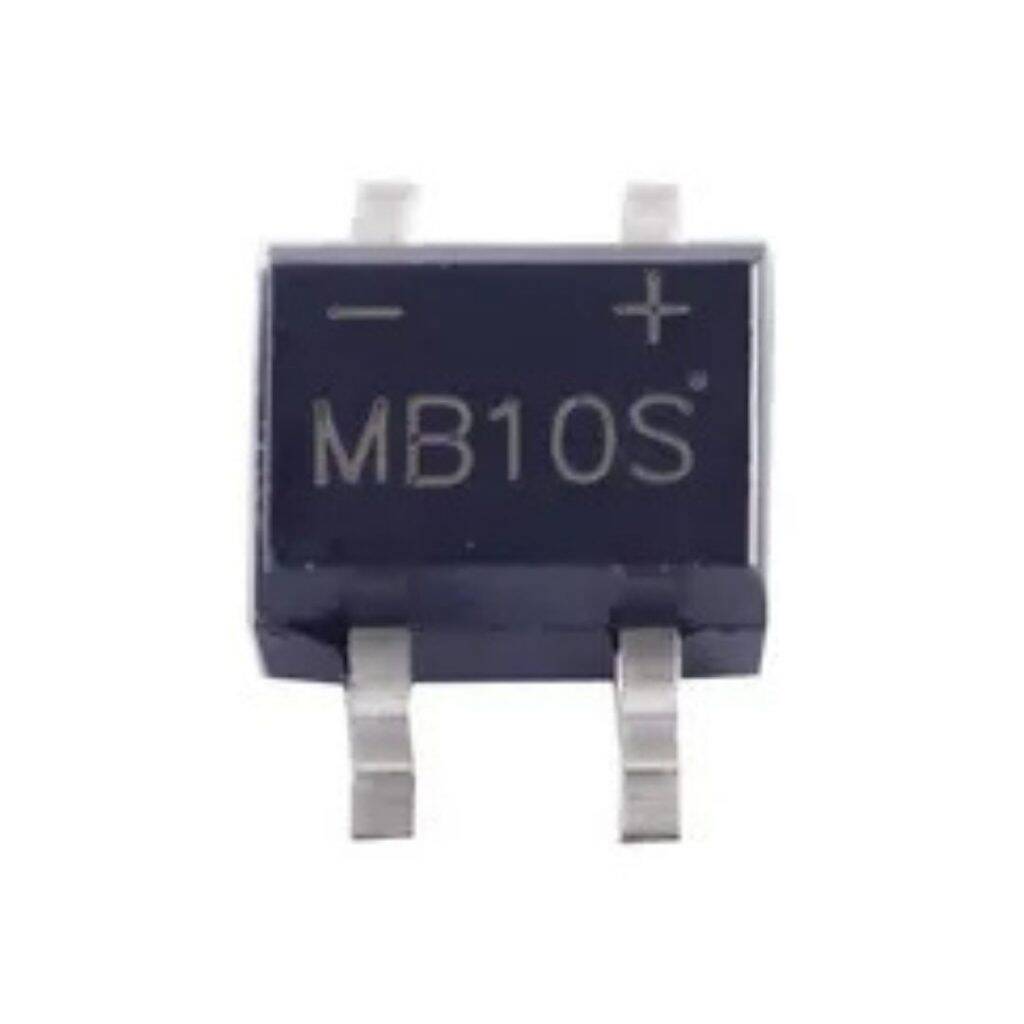
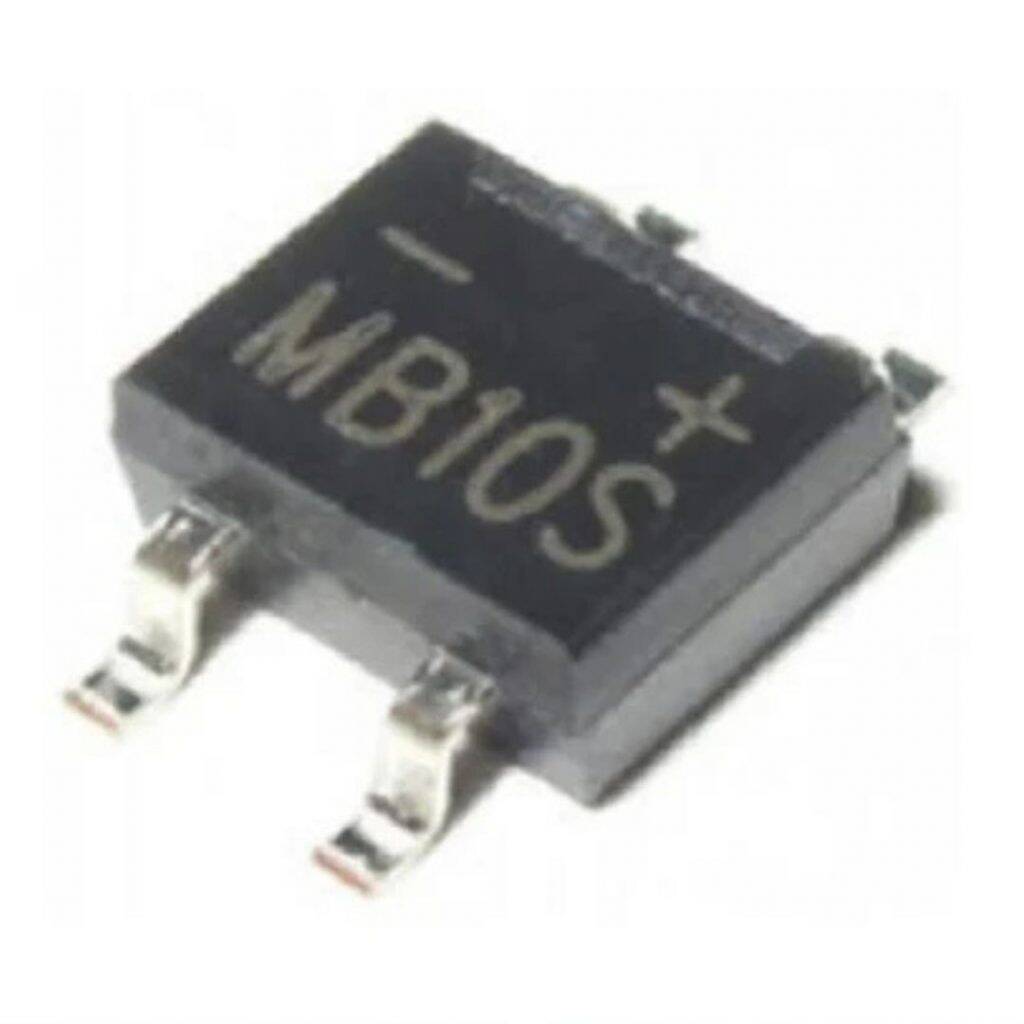
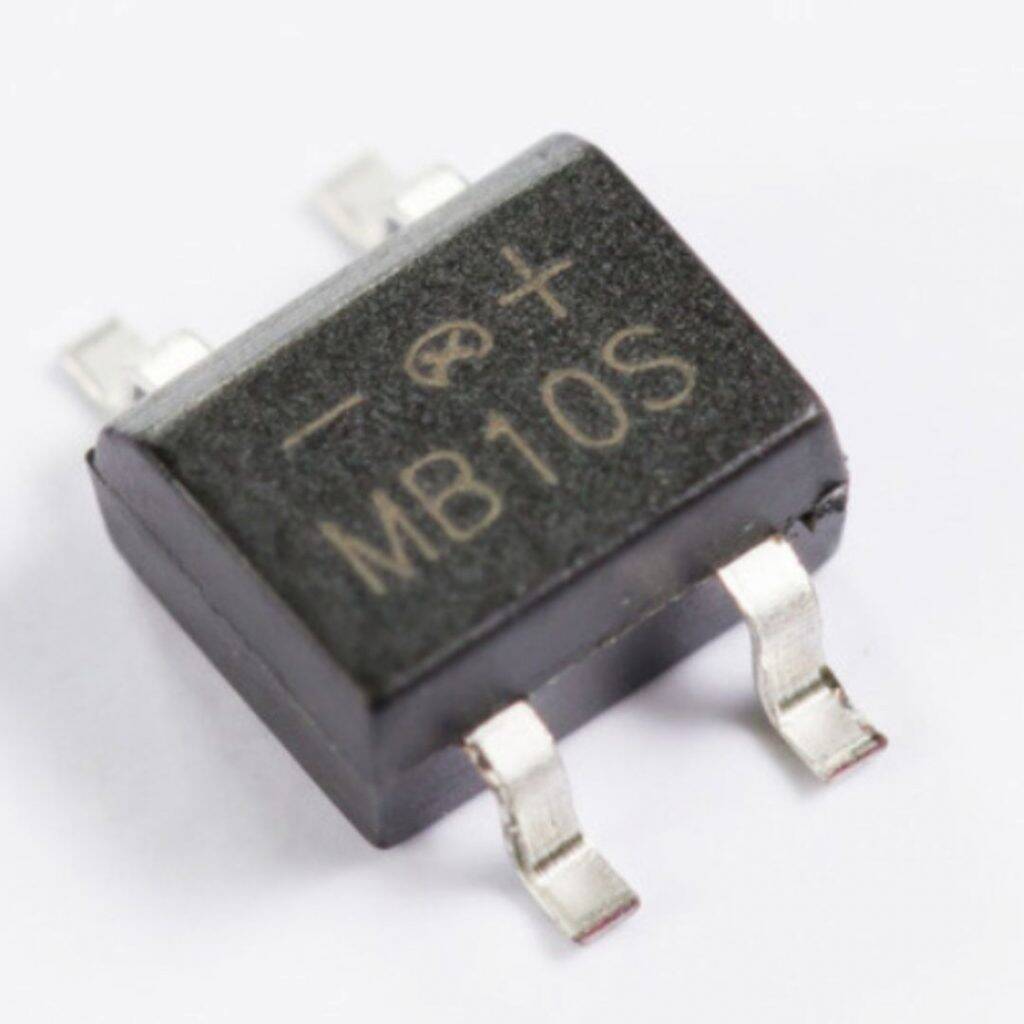
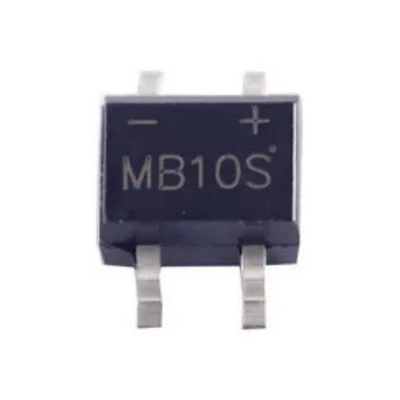
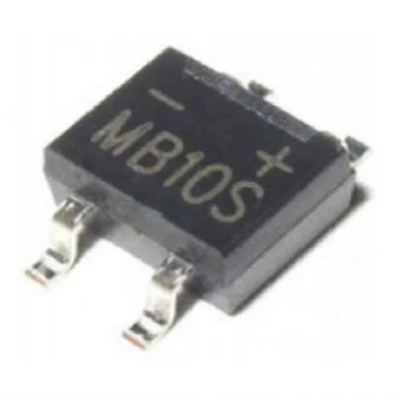
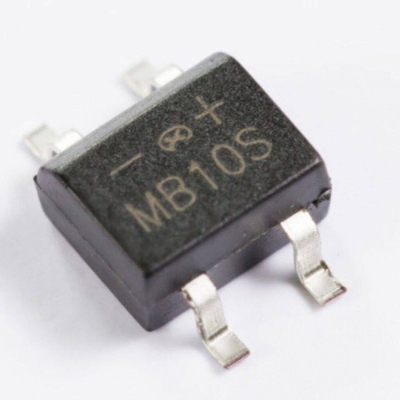
Description: MB10S 1000V Bridge Rectifier Diode
MB10S 1000V Bridge Rectifier Diode
Key Specifications:
From the datasheet and distributor info:
- Repetitive peak reverse voltage (V₍RRM₎): 1 kV (1000 V) maximum.
- Average forward (rectified) current: approx 0.5 A (some listings say up to 0.8 A depending on conditions).
- Max forward voltage drop (Vf) at ~ If = 0.5 A: ~ 1.0 V (some list 1.1 V)
- Non‑repetitive surge current (IFSM): ~ 30‑35 A (for short bursts)
- Operating junction temperature: from roughly –55 °C up to +150 °C (depending on package and manufacturer)
- Package / mounting: Surface Mount (SMD) 4‑pin “bridge” style – e.g., SOIC‑4 / TO‑269AA like outline (“4‑BESOP” etc)
- Reverse leakage current: very low; e.g., ~5 µA at 1000 V in one listing.
What it does & typical Applications:
- It is a full‑wave bridge rectifier: it contains four diodes arranged so that AC input (~ terminal) is converted into a DC output (+ and – terminals).
- Because of its 1000 V rating, it’s suitable for higher voltage AC input rectification (e.g., mains supplies, high voltage small power supplies) where you need full wave DC.
- The SMD small footprint means it can be used in compact PCB designs where space is constrained but you still need moderate current (around 0.5‑0.8 A) and high voltage rating.
- Typical uses: small power supplies, AC mains to DC convertors (in low power equipment), board level rectification, etc.
Important design / usage considerations:
- Even though the average current is modest (~0.5 A), the surge current spec is high (~30 A) — meaning it can handle short bursts of charging current (for example when a capacitor after rectifier charges). But you must design for proper heat dissipation.
- The forward voltage drop (~1 V) means that at 0.5 A you’ll drop about 0.5W of power, plus losses from associated wiring/traces. Make sure your PCB traces and thermal design handle it.
- Check the ambient temperature and the package: at higher junction temperatures the current rating may reduce, and reverse leakage current will increase with temperature.
- Ensure that the reverse voltage rating (1000 V) is sufficient for your application: remember if you have e.g. 230 VAC mains, the peak is ~ 325 V, plus spikes/surge margins. 1000 V gives good headroom.
- Mounting: ensure the footprint matches the package (SOIC‑4 / whatever the variant is). Ensure good soldering and that the board copper/pad layout supports thermal conduction.
- In safety‑critical or high‑reliability designs, check if the device has required certifications/ratings (is it UL recognized, is it robust vs surge, etc).
- Pay attention to the pin‑out: typically two pins are AC input (~ ~), one is “+” (positive DC output), one is “–” (negative DC output). Incorrect connection may destroy the device. (As one forum user described: > “The AC comes into the bridge rectifier chip MB10 … any polarity will work, even AC.”)
Package include:
1 x MB10S 1000V Bridge Rectifier Diode

Customer Questions and answers :
Login to ask a question
